Picasso's Cubism: Seeing the World in Fragments
Cubism shattered the single viewpoint governing Western painting for five centuries, and Picasso was its most restless architect.
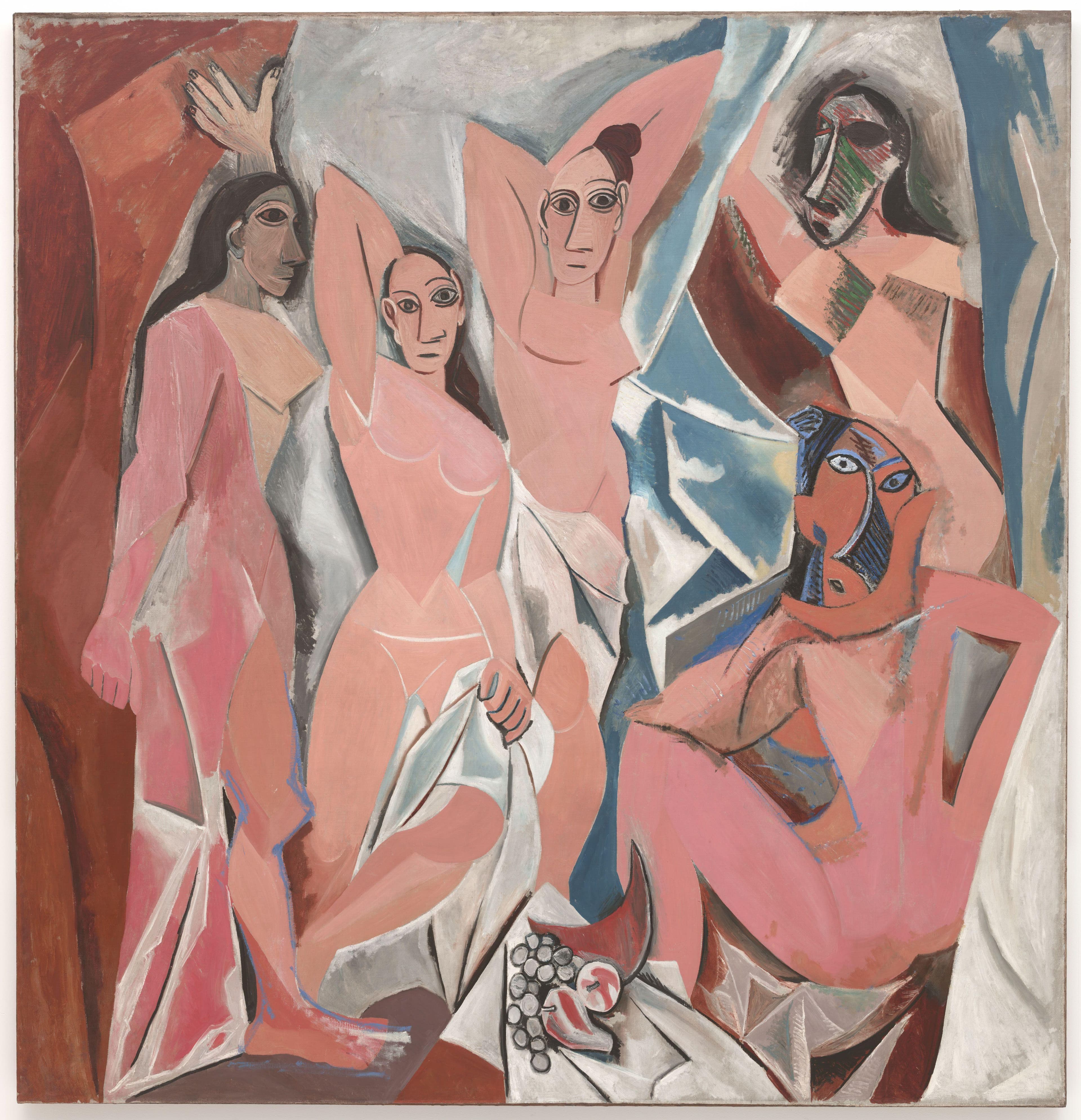
Sometime in 1907, Pablo Picasso pinned a large canvas to the wall of his studio at the Bateau-Lavoir in Montmartre and began the painting that would eventually be called Les Demoiselles d'Avignon. When he showed it to fellow artists and collectors, the reaction was one of shock and bewilderment. Something had broken — and Picasso had broken it deliberately.
The Logic Behind the Fragments
Renaissance painting had organized the picture plane around a single, fixed viewpoint — as if the viewer stood still and a window opened onto the world. Picasso and Georges Braque asked: why should a painting be limited to one moment of seeing? A face has a front and a profile; why not show both simultaneously?
Cubism dismantles an object into planes and reassembles them on the canvas from multiple perspectives at once. The result is disorienting at first glance, but intellectually it is more honest about how we actually know things — through accumulated experience, memory, and multiple encounters.
Analytic and Synthetic
Art historians divide Cubism into two phases. Analytic Cubism (roughly 1908–1912) is austere: muted grays and browns, objects fractured almost beyond recognition. Synthetic Cubism came next — bolder colors, collaged materials, newspaper fragments glued to canvas. It introduced everyday life directly into fine art.
Both phases influenced everything that followed: Futurism, Constructivism, abstract painting, graphic design, and architecture all carry Cubism's DNA.
Picasso Beyond Cubism
Picasso never stopped reinventing himself. Neoclassical periods, Surrealist phases, politically charged works like Guernica (1937) — his career spans so many styles it reads like a one-man history of twentieth-century art. But Cubism remains his most radical and lasting contribution: proof that a painting can think.