Sea of Euphoria by David Hovan: Where Emotion Meets the Ocean
David Hovan's Sea of Euphoria channels the ocean's power into an emotional mixed-media canvas — layered, turbulent, and radiantly alive.
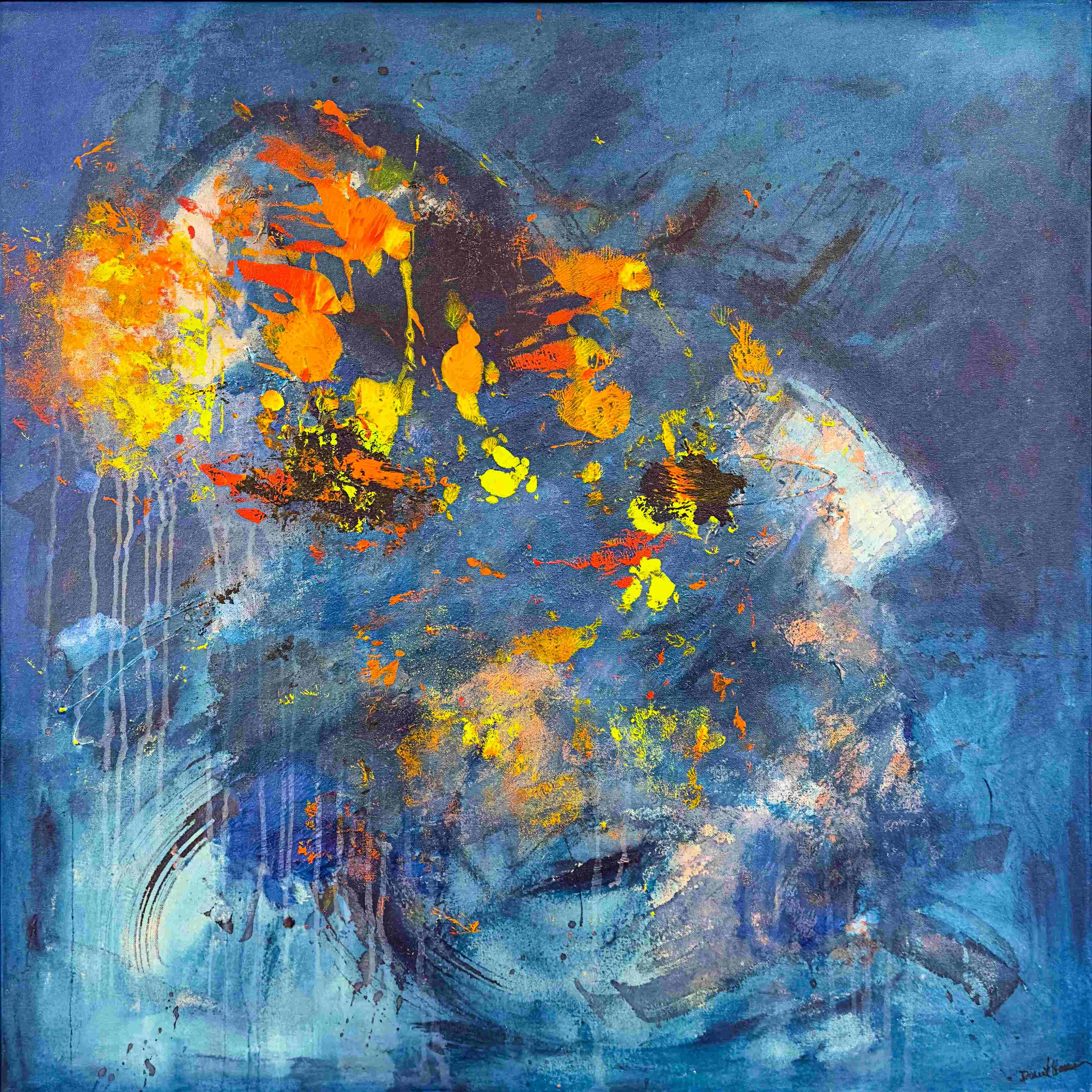
There is a particular quality of light that exists only at sea — a brightness that comes not just from above but from all directions at once, reflected and re-reflected off shifting surfaces until the world becomes luminous from within. David Hovan's Sea of Euphoria captures that quality with an intensity that few marine painters achieve, and does so through a mixed-media approach that gives the work a physical presence as powerful as the ocean itself.
The Artist: David Hovan's Visual Language
David Hovan works at the intersection of realism and abstraction, using the ocean not as a subject to be documented but as a vehicle for exploring states of emotional intensity. His paintings are informed by direct experience of the sea — the way a wave gathers force before breaking, the colour shift that happens in deep water versus shallow, the specific quality of light in the moments after a storm clears.
But Hovan is not a realist in any strict sense. His interest lies in what the ocean feels like rather than what it looks like, and this distinction drives every decision he makes about material, color, and composition.
Mixed Media as Method: Building the Surface
Sea of Euphoria is executed in mixed media on canvas at 36 by 36 inches — a square format that gives the composition equal weight in all directions, preventing the eye from falling into a simple horizontal reading. Hovan layers his surfaces with a combination of acrylic mediums, oil paint, and textural additives, building up passages that have genuine physical relief — areas where the paint rises from the canvas surface and catches light at angles that change as the viewer moves.
This textural approach is not decoration. It is structural. The ocean is not a flat surface and Hovan refuses to paint it as one. The built-up impasto in the wave crests gives those passages a visual weight that corresponds to their physical reality. When the light hits these raised areas from the side, the painting seems to move — to breathe with the same rhythm as the water it depicts.
The Color Architecture of Euphoria
The title claims an emotional state, and the color palette makes good on that claim. Hovan orchestrates a range of blues, from the deep violet-blue of open water to the near-turquoise of shallows catching sky, punctuated by whites that are never simply white — they contain the full spectrum of the light sources bouncing through them. The overall effect is one of chromatic excess, of more color than the eye expects from a seascape, which produces the slightly vertiginous quality the title names: euphoria as a sensory overload that tips into something beyond ordinary pleasure.
There is also warmth in the work — gold and amber tones that suggest late afternoon sun — which prevents the painting from feeling cold despite its oceanic subject. This warmth is the emotional signature of the piece: not the austerity of the open sea but the joy of being in it, of giving yourself to something larger and more powerful than yourself.
The Square Format and Its Implications
The 36-by-36-inch square format is worth examining closely. Marine painting has traditionally worked in horizontal formats that echo the horizon — the fundamental visual fact of the ocean. By choosing a square, Hovan disrupts that convention and forces a different kind of attention. Without a dominant horizontal axis, the composition becomes more dynamic, more unstable, more genuinely oceanic. The eye circles rather than scans, which is closer to the actual experience of being surrounded by water than any conventional seascape perspective allows.
Euphoria as Subject
What is Hovan actually painting when he paints euphoria? The word comes from the Greek for "bearing well" — originally a medical term for the feeling of physical well-being, later broadened to describe any state of intense happiness. In contemporary usage it carries a slight edge of excess, of a happiness too large to be entirely safe. That edge is present in Sea of Euphoria. This is not a peaceful painting. The ocean in it has force. The light is almost too bright. The color is almost too saturated. It is a painting about a joy that costs something — the surrender of the self to something vast and indifferent. Which is perhaps what the ocean has always been for those who love it: not comfort, but amplitude.