Michelangelo: The Divine Hand of the Renaissance
From the Sistine Chapel ceiling to the towering David, Michelangelo pushed the human form to its most transcendent expression.
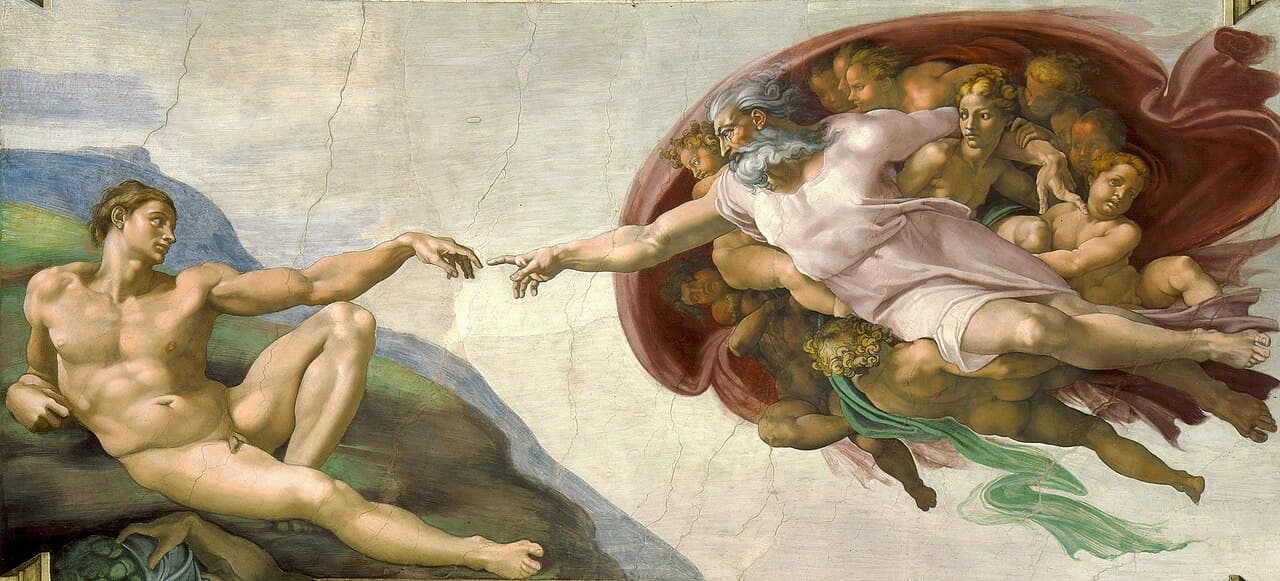
Michelangelo di Lodovico Buonarroti Simoni insisted he was a sculptor above all else. The four-year commission to paint the Sistine Chapel ceiling, he claimed, was an imposition forced on him by Pope Julius II. And yet the 500 square meters of fresco he produced between 1508 and 1512 represent perhaps the single most ambitious artistic undertaking in the history of Western civilization.
The Ceiling
The Sistine Chapel ceiling contains nine scenes from Genesis surrounded by prophets, sibyls, ignudi, and hundreds of other figures — all painted while Michelangelo stood on scaffolding with his neck craned upward, paint dripping into his eyes. He wrote a comic poem about the discomfort: "My beard turns up to heaven; my nape falls in, fixed on my spine... my brush, above my face continually, makes it a splendid floor by dripping down."
The figures in the ceiling are monumental — classical in pose but superhuman in scale, their muscles defined with an authority no previous artist had commanded. The Creation of Adam, with its almost-touching fingers suspended across the vault, achieves a visual economy that makes theological content immediately legible from sixty feet below.
The David
The marble David (1501–1504) stands seventeen feet tall. It depicts the biblical shepherd not after the victory over Goliath — as was conventional — but in the moment before, his gaze fixed on the approaching giant, his hand holding the sling, every muscle taut with concentrated resolve. The psychological specificity is remarkable: this is a figure in the act of deciding.
Michelangelo famously said that the sculpture already exists within the marble; the sculptor's task is simply to remove everything that is not the sculpture. Whatever the metaphysics, the result in David's case is a figure of such physical conviction that viewers often describe feeling slightly nervous in its presence.
Poetry and Old Age
In his later years, Michelangelo turned increasingly to architecture — the dome of St. Peter's Basilica is largely his design — and to a deeply personal body of poetry. The poems are austere and spiritually searching, very different from the triumphant power of the early sculptures. They are the work of a man who had been called divine since his twenties, reckoning with what divinity actually means in the face of death.