Hokusai and The Great Wave: Japan's Visual Poetry
A single woodblock print — a cresting wave about to swallow fishing boats — became one of the most recognized images in human history.
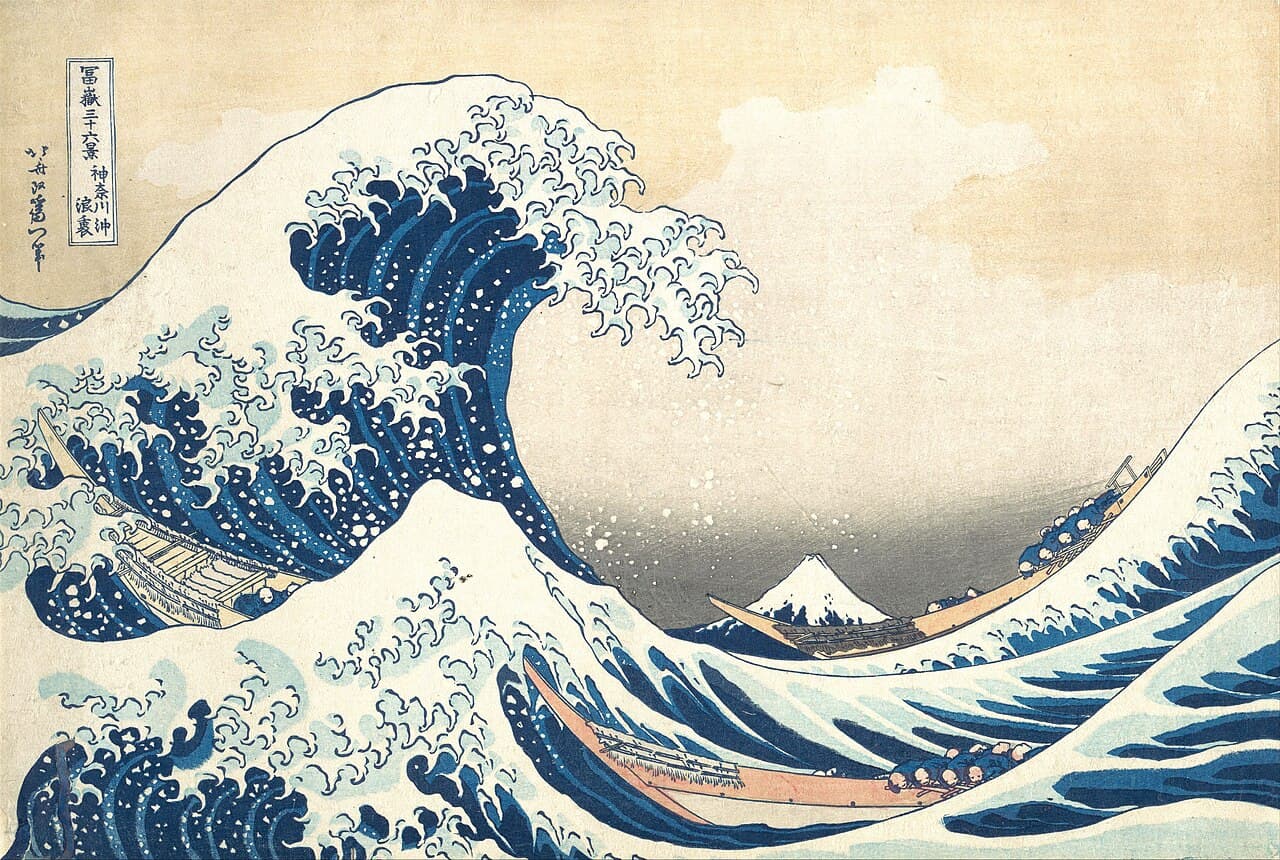
Katsushika Hokusai was 71 years old when he published Under the Wave off Kanagawa, better known as The Great Wave. It was one print in a series of thirty-six views of Mount Fuji. He had been making prints and paintings for over fifty years. He would live to 88 and work until nearly the last day of his life.
Ukiyo-e: Pictures of the Floating World
Ukiyo-e — "pictures of the floating world" — was a genre of Japanese art that flourished between the 17th and 19th centuries. It depicted the pleasures of urban life: kabuki actors, sumo wrestlers, beautiful courtesans, and landscapes. Printed from carved wooden blocks, ukiyo-e were affordable and widely distributed, the popular media of their era.
Hokusai mastered the form and then pushed far beyond it. His landscapes transformed a genre associated with city entertainment into vehicles for contemplating nature's power and scale.
The Wave
The Great Wave is simultaneously terrifying and precise. The claw-like foam at the wave's crest grabs at the tiny boats below. In the background, Mount Fuji — permanent, snow-capped, dwarfed by the temporary but overwhelming surge of water — provides scale and contrast. The composition obeys no single visual tradition; it draws on both Japanese aesthetics and Dutch perspective prints that Hokusai studied intently.
The Prussian blue pigment, newly available from European trade, gave the print its distinctive deep tones. It was a technological import used in the service of a distinctly Japanese vision.
A Life of Constant Reinvention
Hokusai changed his artistic name at least thirty times, reinventing his practice with each change. He called himself "an old man mad about painting." At 75, he wrote that he had drawn everything, but nothing he produced before 73 was of any real value. He hoped to finally understand how things truly looked by 90. He did not quite make it — but what he left behind suggests he came very close.